Fast-Growing Interest in Fast-Growing Duckweed As Superfood for Space

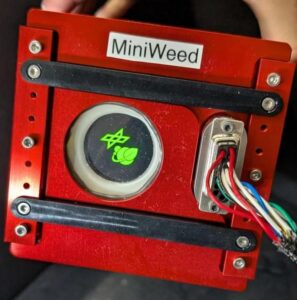
Square Miniweed device with DLR logo and wire connected.

Miniweed device (credit U. of Adelaide)

Duckweed is a low-key pond plant used for food in Southeast Asia. Yet, despite its tiny size, duckweed has several nutritional and growing characteristics that make it of high interest for use in space. Several endeavors are seriously examining duckweed as an important component of the diets of future astronauts, including a planned launch to the Moon.

Continue reading

New Microgravity Spraying Technology Rains Benefits on Earth

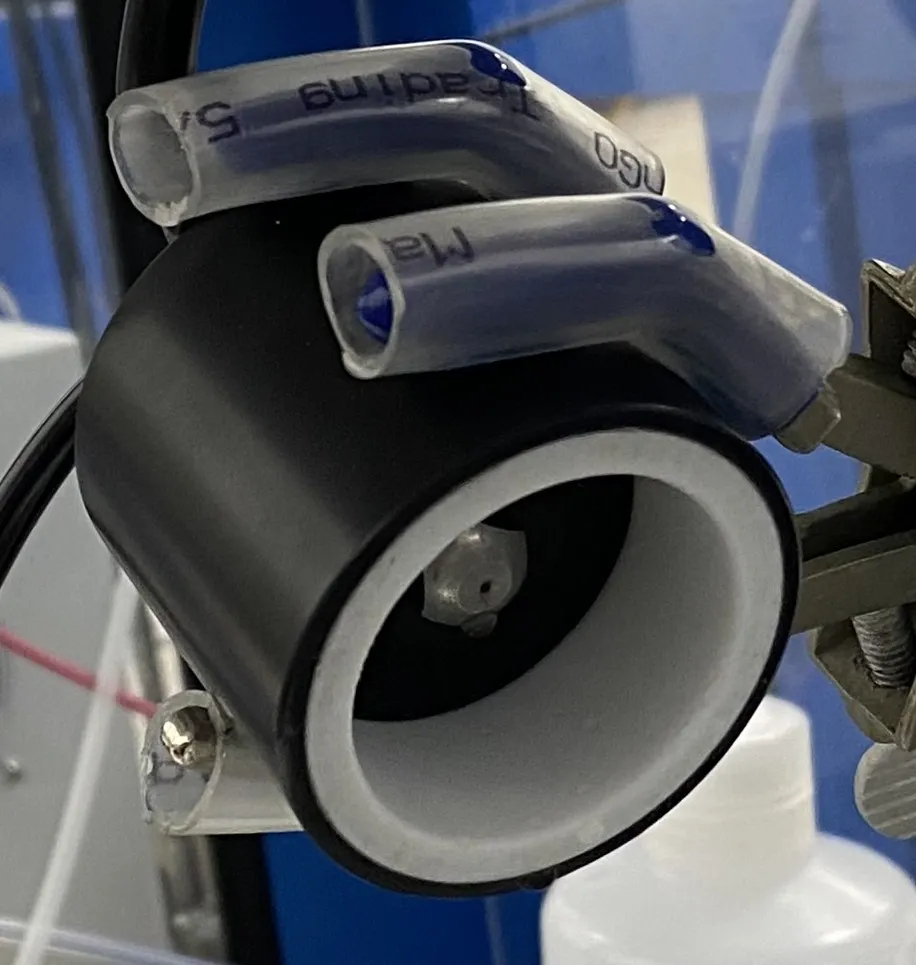
hollow cylinder with nozzle

Figure 1—ESS mister nozzle (credit: NASA)

Spraying technology developed at the NASA Kennedy Space Center helps to overcome  the challenges of microgravity on the use of aerial fluids in space while at the same time allows for more efficient spraying on Earth, helping to support more sustainable agriculture.

Continue reading

Will Finding Water On The Moon Be the New “Striking Oil”?

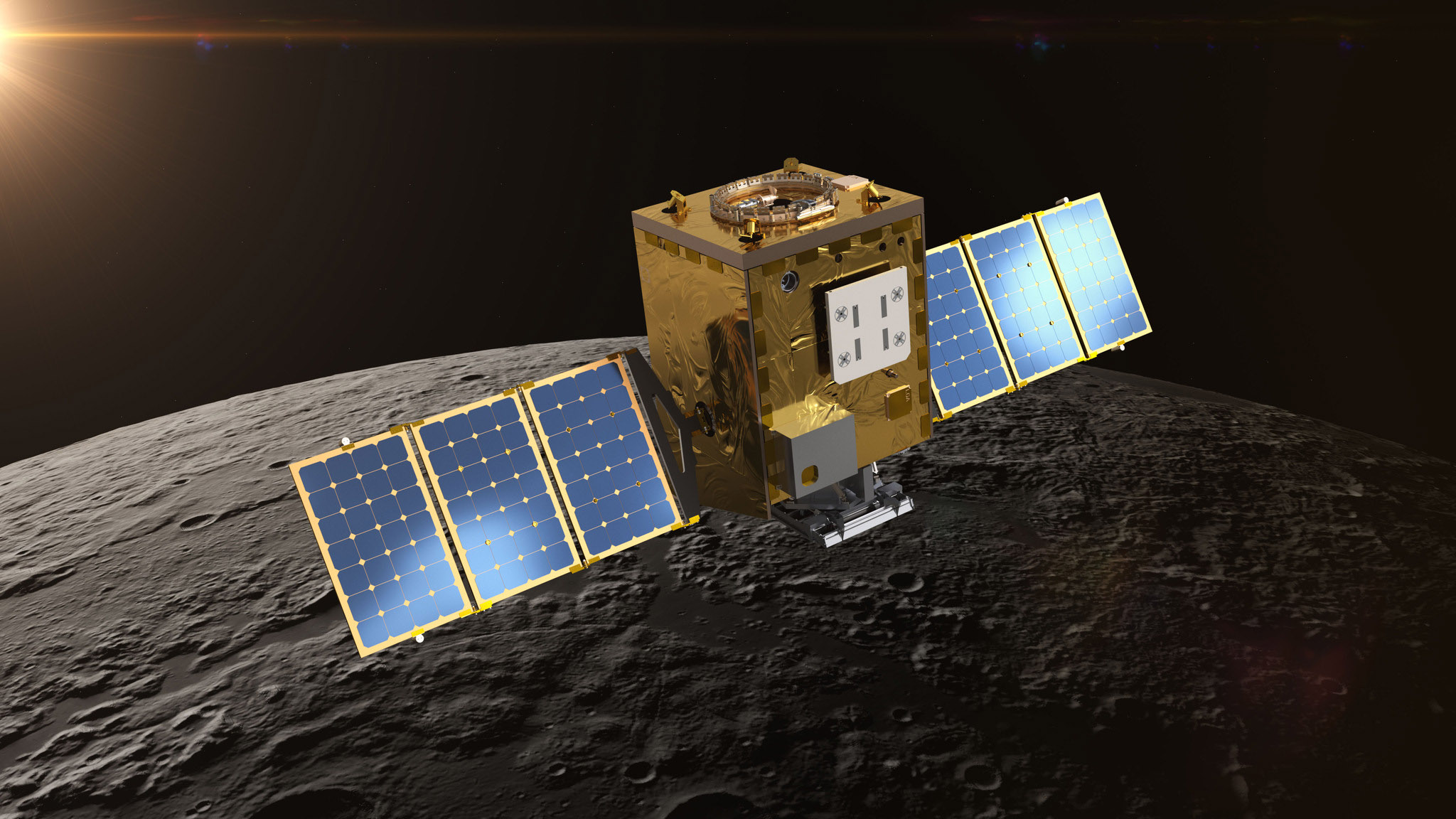
Cubical spacecraft with solar panels orbiting above Moon

Searching for High-resolution Volatiles: Lunar Trailblazer Illustration (credit: Lockheed Martin Space)

In the 1800s and 1900s on Earth, you made your fortune if you discovered a new petroleum source. More colorfully spoken, “Striking it Rich!” was the subject of movies, such as 1956 Giant and the television series The Beverly Hillbillies. The competition is heating up for the discovery and capture lunar resources due to the new space race there. Aside from its symbolic value, water can enable life and be used for in situ fuels and other materials. What progress has been made to find and utilize lunar water? Water on the moon might be even more valuable than petroleum on Earth.

SustainSpace has covered water use and recycling on the International Space Station (ISS) in NASA Targets Reduced Water Usage for Long Duration Missions (2014 and Airbus ESA Advanced Closed Loop System (ACLS) (2018), etc. Some of that technology can be used on the Moon. Yet what is new?
Continue reading

Plant Space Research Update

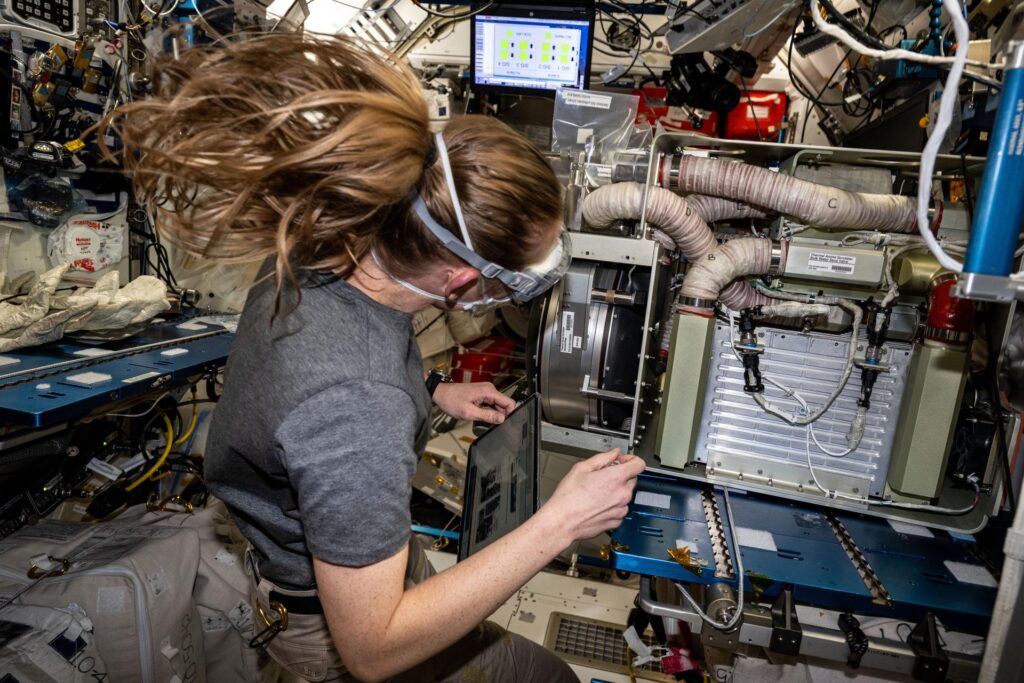
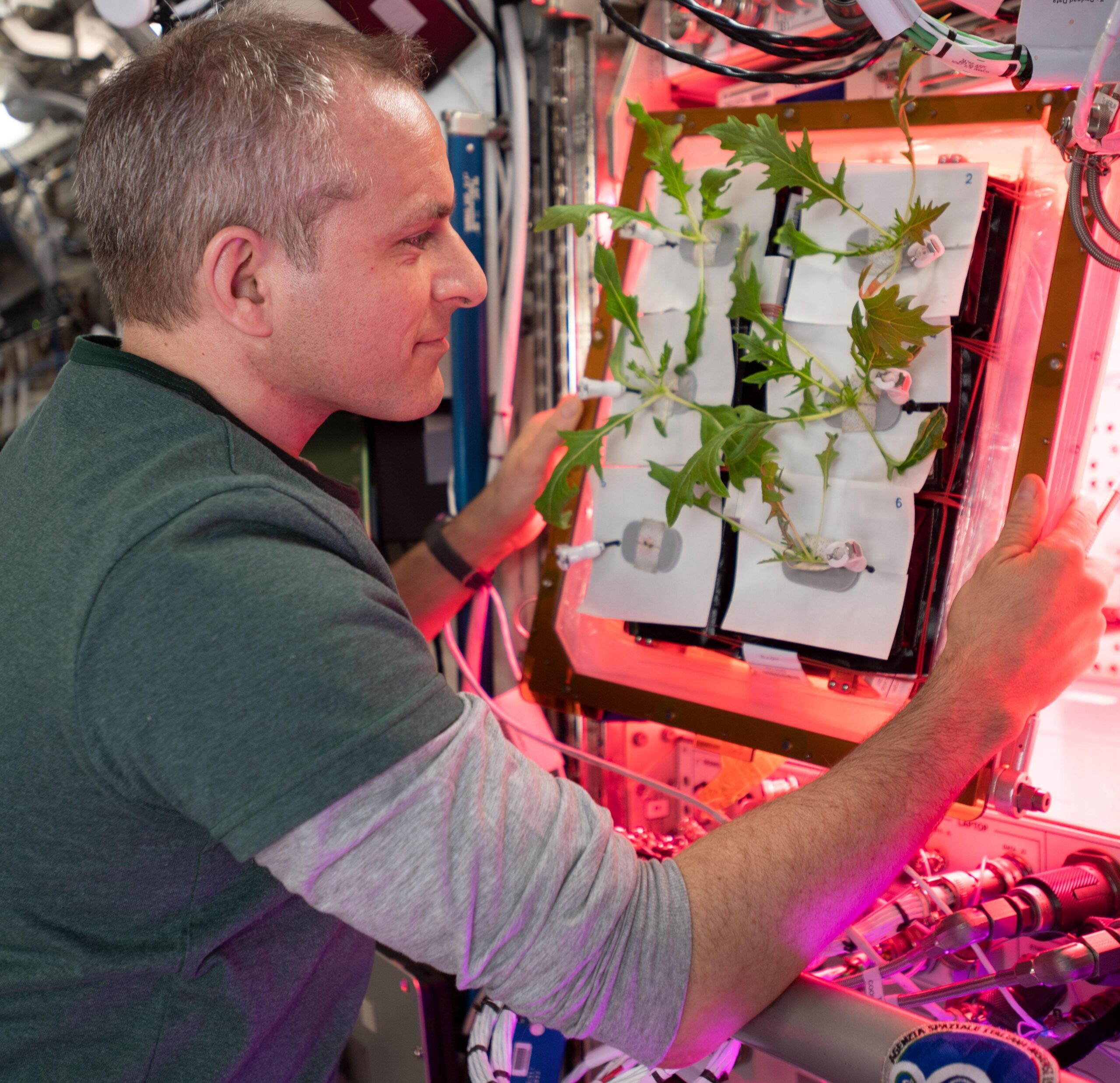
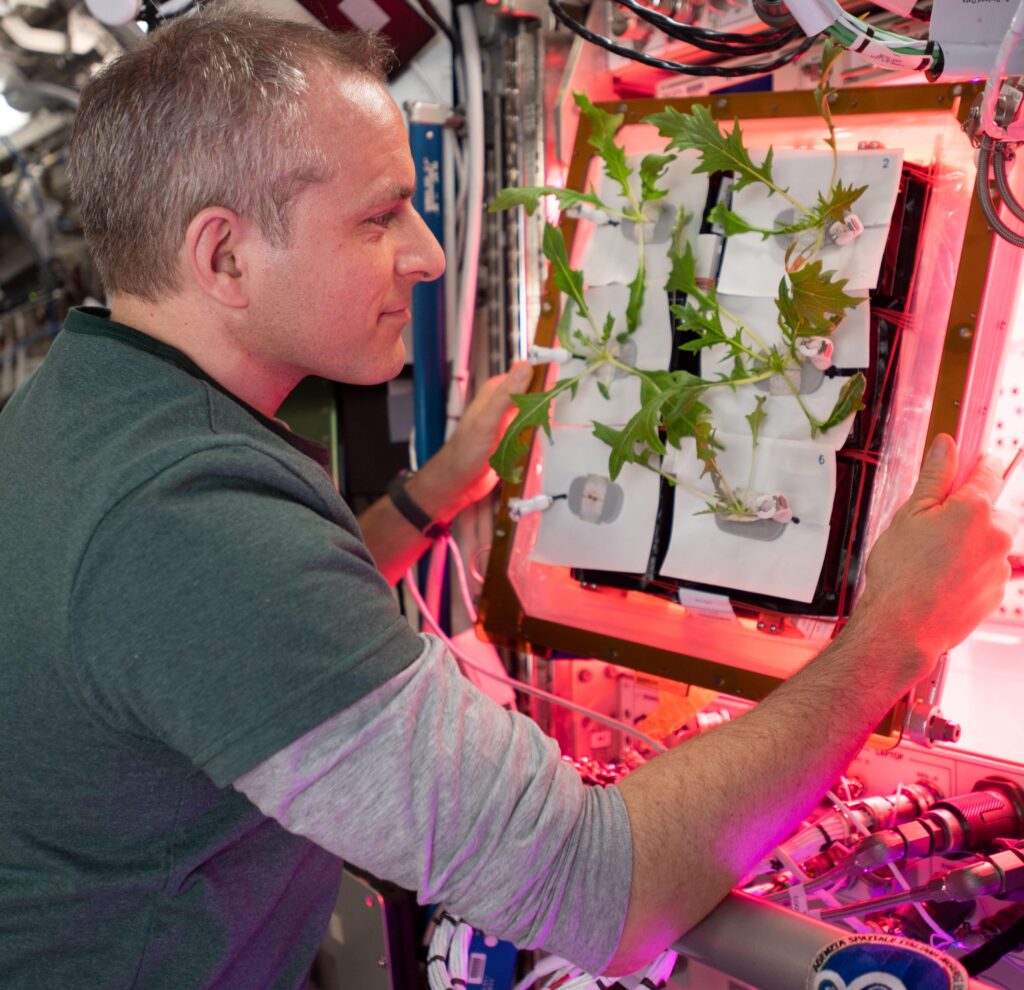
Credit: NASA. CSA astronaut David Saint-Jacques during Veg-04 Water Check and Mass Measurement Device Operations.

Creating a renewable food source in space is essential for a sustainable human presence in space. Plants will likely be an important component of such a sustainable space life support ecosystem for the same reasons they are valuable on Earth. Plants provide both a food source and aesthetic value on Earth. They are also a valuable source of raw materials for products, such as cotton for clothing. In space, they provide the added benefits of recycling exhaled carbon dioxide as well as offering the ability to recycle other human waste. There is also the hope that growing plants in thematic environments of space will lead to new botanical discoveries that will be beneficial to Earth agriculture.

For over fifty years, scientists have been researching whether plants can grow in space and how they react to the space environment. That effort continues. This article will identify and discuss recent space research and its significance.

Plant research must occur in a suitable place in space. That space must be capable of providing a suitable pressure and temperature, radiation protection, and communications capabilities. Although it is possible to construct such an environment in a standalone satellite, locating plant experiments in a location that already possesses those characteristics, such as space stations, tends to be much more convenient. There are presently two such stations: the International Space Station (ISS) and the Chinese Tiangong space station. Most contemporary plant research in space is conducted in these two locations. There are two recent exceptions. First was the Chinese Chang’e 4 lunar spacecraft (2018–2019) on which cotton plants were grown for a short time. The other was the European Eu:CROPIS satellite (2018–2019) which made it to space, but then experienced a malfunction.

This article focuses on research conducted on the ISS. There are currently two chief facilities for plant experiments there. The Advanced Plant Habitat (APH) is suitable for more rigorous plant experiments that require considerable environmental control and sensing. The VEGGIE chamber is suitable for a range of experiments, and is especially well suited for growing. There are sometimes other facilities which will be covered in a future story.

Continue reading

Decadal Study Unveils Life Support & Science Priorities

Survey cover

Credit NAS.

Every ten years, the National Academy of Sciences conducts a study of particular areas of space research and makes findings and recommendations. The latest version of Thriving in Space: Ensuring the Future of Biological and Physical Sciences Research: A Decadal Survey for 2023-2032 (2023), hereinafter referred to was the Survey. is being unveiled. While the final version is not yet out, Sustainspace has viewed a substantial-finished preprint and presents several important part of the report related to space life support, plant research, and sustainability.

Continue reading

Space Housing Market Update

On Sept. 27, 2023, NASA astronaut Frank Rubio broke the record for consecutive days in space, completing a single mission aboard the International Space Station of 371 days, which conclusively proves that astronauts can live in space for over a year and suggests that astronauts can survive in space much longer. (Russian cosmonaut Valery Ryumin also logged 371 days in space, but broken over four missions).

It’s an exciting milestone towards longterm human endurance and sustainability in space. Do you want to live in space in the near future? Here is an updated list of the prospective locations.

Continue reading

A New Era of Private Space Stations

Background

For the past several years, there has been much hullabaloo regarding proposed private space stations. Yet several current proposals seem much more substantive than chiefly aspirational proposals in the past. That the International Space Station (ISS) has less than one decade of expected life remaining has accelerated both investment as well as government interest and funding. Reduced launch costs provide a further foundation for  the tangibility of such proposals.

Continue reading